Showing posts with label Publishing Tips. Show all posts

Thursday, October 27, 2016

15 Things Successful Writers NEVER Say

by Edie Melson @EdieMelson

Writers are an odd lot.
I can say that, because I am one. So I speak from experience, not judgment. Like all creative people, we tend to feel things more deeply, reacting poorly to criticism.
We also have no perspective at all when it comes to our own creations. Because a lot of us begin writing as a hobby, we also seem to have a lop-sided view of the publishing industry.
So today, I’d like to clear up some common misconceptions and share some things that successful writers never say.

1. Uh…I guess…uh…I write. So…I suppose that makes me a writer…sometimes. CUT. IT. OUT. If you are serious about writing, even if you don’t get paid, you can call yourself a writer. So repeat after me. “I am a writer.”
2. I’m a much better writer than the majority of the published writers out there. This is for the small percentage who don’t have trouble telling everyone, “I am a writer.” Some of you believe you know more than everyone else. I hate to break it to you, but you don’t.
3. Sure, I don’t need to write today. I’ll go to lunch with you. Successful writers make spending time putting words on paper (or a screen) a priority. If we want to be taken seriously and have our time respected, we must set the example.
4. I don’t need to read books. I’m a writer, not a reader. Besides, I don’t have time to read. I am not kidding. I’ve actually had writers tell me this. We need to spend time reading, and reading widely. Read outside your genre and learn what works and what doesn’t.
5. I don’t need an editor. I have a sharp eye and can catch anything I need to in my writing. Yes, many of us do have an editor’s eye. That’s a good thing. But that is NO substitute for an editor. We are blind when it comes to our writing. We see what is supposed to be on the page, not what is.
6. I can’t afford to attend conferences. I know conferences are expensive, but they’re also vital to moving forward in your writing career. There are a lot of ways to fund a conference—from asking for money from family and friends instead of gifts for holidays, to writing small articles for pay and saving that money. Conferences do three MAJOR things for writers:

  • They provide a place to learn the latest industry standards and techniques.
  • They provide a place to network and talk to writing professionals, like editors, agents and published writers.
  • They provide a place to network with other writer.
7. I decided to self-publish because traditional publishing just takes too long. I’m glad to say that self-publishing—when done with professionalism—is now a respected option. Beyond that, there are a lot of good reasons to self-publish. But using self-publishing as a short cut is NOT a good reason.
8. I don’t have a target audience, everyone loves what I write. Every book has a primary audience. Yes, there are books that a lot of people enjoy. But if you write to a specific audience, you’ll have a much better finished product. Not to mention the fact that book stores will know where to shelve your book.
9. The rules don’t apply to me. Yes, I’ll be the first one to agree that there are exceptions to almost every single rule you ever hear about writing and/or publishing. BUT we can’t look at ourselves as that exception. Follow the rules and let the exceptions be a wonderful surprise if and when they happen.
10. The first part of my book is just information the reader needs, the story starts on page 70 (40, 60, 90, etc.). I really have lost track of the number of times I’ve had an author say this to me. Here is my response. If the story starts on page 70, that’s where your book needs to start. Trust your reader, and trust yourself, and skip the background information.
11. I’m not a marketer, I’m a writer. If this really is true and you absolutely refuse to market your work, then be prepared to pay. You’ll have to hire someone to market your book because marketing is a joint partnership between the publisher and the writer. That’s just the way publishing works today.
12. The publishing industry is dying. No, not really. It’s definitely changing, but it’s not dying. There’s a difference. Learn to adapt with the changes, but realize books and people who write them aren’t going anywhere.
13. I already have a book contract, I don’t need a literary agent. Now you need one more than ever. There are those who will argue this point, but here are my thoughts. Because of the rapid changes in publishing, contracts are brutal. You need someone in your corner, advocating for you. After the contract, you still need someone to help with possible (really probable) hiccups in the publishing process. If you don’t like your cover, or the copy editor isn’t doing a good job, your agent can be the bad guy and go to bat for you. This makes it possible for you to stay on good working relations with the publisher.
14. I don’t need to work on social media until after I have a contract. This is another that makes me cringe. Editors and agents award book contracts based on a lot of things. Now days, one of those things is whether or not an author has solid online presence. The lack of a presence may not always keep you from getting a contract, but it will affect the way you’re viewed by prospective buyers. Smart writers build an online presence while they’re working on a book, so everything is in place when they begin pitching.
15. Published authors don’t need to take classes or read books on writing. Successful writers know there’s never a point when you’ve arrived. Lifelong learning isn’t just a buzzword, it’s vital to stay current in the publishing industry.
Even though I slanted a lot of the points toward books, all are equally applicable to writers of shorter works. These are things that I believe you’ll never hear a successful writer say. I’d love to know what you’d add to this list. Be sure to leave your thoughts in the comments section below.
Don’t forget to join the conversation!
Blessings,
Edie

Edie Melson is the author of numerous books, as well as a freelance writer and editor. Her blog, The Write Conversation, reaches thousands each month. She’s the co-director of the Blue Ridge Mountains ChristianWriters Conference and the Social Media Mentor at My Book Therapy. She’s also the Military Family Blogger at Guideposts. Com, Social Media Director for SouthernWriters Magazine and the Senior Editor for NovelRocket.com. Connect with her on Twitter and Facebook. Don't miss her new book from Worthy Inspired, WHILE MY SOLDIER SERVES.

Thursday, April 30, 2015

What makes an Amazon Bestselling Novel?

By Misty M Beller @MistyMBeller

Doesn't it seem crazy how some books leap to the top of Amazon's bestseller ranking and others stay somewhere around 75,000? I've studied hundreds (maybe thousands) of books on Amazon.com, and have come to the same conclusion as many other great authors and publishers. There are four basic ingredients to success in the cyber world of the Amazon Bookstore.

1. Good cover that sparks interest and/or emotion.
The cover is your hook. Before title, before craft, before all those weeks, months and years you’ve spent perfecting the story. Your cover art will most often determine whether a potential readers skims past, or clicks your book thumbnail to read more.

So what makes a good cover? I won’t list everything here, but in my opinion one of the most important jobs of a successful book cover is to spark interest or emotion. Skim the top books in your favorite categories on Amazon.com and you’ll see what I mean.


As you can imagine, developing an amazing book cover is not easy. If you’re traditionally published, you may have little say in the outcome. But I would encourage you to make every effort possible to ensure your cover will stir the emotion that draws your target reader.

2. Good product description (back cover blurb) that shows interesting characters, a great story, and plenty of tension.
We’re all writers, correct? Crafters of words. So putting together fifty words to share the opening highlights of story should be a piece of cake. I’m sure you’re chuckling with me. J

If you were successful in drawing a potential reader with your emotion-generating cover art, this is the place to hook them with your “Product Description.” (Such a bland name for a powerful text box.)

Spend focused time on this blurb. Run it through your critique group. Seek feedback from a variety of people, especially those in your target reader demographic. Tweak it until it shines!
(Note to authors who publish independently or through small publishers: You are most likely writing the final draft of the Product Description, so you’ll want to include as many of your keywords as you can.)

3. High number of reviews and average rating.
Here's where we talk about craft and producing a well-written novel. You were afraid I wouldn't mention it, weren't you?

We all hear word of mouth is what sells books. The Amazon review is one of the most powerful word-of-mouth tools you'll ever encounter. Is your book well-researched? Your readers will appreciate that and mention it in their reviews. Did you forget to tie up loose ends in your story line? You'll be called out on it, I guarantee. Potential readers often look at the reviews to see if they're willing to spend precious money and time to read your story. Hone your craft and write the best story possible, and your reviews will reflect it.

How many reviews do you need? Many writers say it seems there's something "magical" about reaching twenty-five. After that, they seem to come so much easier and quicker. The more reviews you have with a four- or five-star rating, the more comfortable a potential reader will be taking a chance on your book.

4. Visibility (discoverability) - readers can't buy the book unless they know about it.
Now we hit the meat of it. You need a good cover, good blurb, and lots of positive reviews to help the reader make the decision to buy. But how does the reader actually find your book among the millions available on Amazon?

Great question! I'm going to mention the highlights here, but I encourage you to attend the ACFW-SC class I'll be teaching in Anderson, SC on May 23. I'll talk through these in detail and answer any questions.

In a nutshell, the ways to increase discoverability are:
  • Advertising (both paid and unpaid)
  • Social media (blog, Facebook, Twitter, etc.)
  • "Personal" appearances (online and in-person)

There's so much more I'd like to mention about tips and tricks for book-selling success on Amazon, but I'll have to save them for another blog post. In the meantime, I'd love to hear your thoughts on anything I've shared!

Misty M. Beller was raised on a farm in South Carolina, so her Southern roots run deep. Her family has always been close-knit, and her husband and two daughters now add another dimension to her life, keeping her both grounded and crazy.

God has placed a desire in Misty’s heart to combine her love for Christian fiction and the simpler ranch life, writing historical novels that display God’s abundant love through the twists and turns in the lives of her characters.


You can find Misty on her website, blog, Goodreads, Twitter, Google+, and Pinterest, and see her latest release, The Lady and the Mountain Doctor. 

Thursday, April 9, 2015

Creating an Effective One Sheet

by Susan F. Craft @SusanFCraft


A One Sheet provides information about your manuscript, which can be presented to an editor or and agent. It includes the following:

Brief Synopses of Your Project
Include two versions: a 25-word pitch, and a longer version of approximately 500-600 words—similar to what would be on the back cover of a novel.

Write the synopsis in present tense, third-person, even though your project may be first-person. Make sure you include important plot points or topics of your manuscript; you don’t want to keep an agent or editor guessing.

Include the genre and the word count.

Be sure to include compelling images.
Illustrations.
Include pictures/graphics that help describe your manuscript.

Photo
Professionals have differing opinions on whether to include a picture of yourself, but if you have a professional portrait, include it. It will help the editor or agent remember you after the conference ends.

Contact Information
Be sure to include your name, address, phone number, email address and website. If you have a blog that features your own writing, you’ll want to include it too, so the editors and agents can see samples of your writing.

Layout of your One Sheet
Use professional software, such as Microsoft Publisher, to create your  One Sheet. Use the template for a flyer, or from the first page of a newsletter, to get the look you want.

Color attracts attention, so use white paper, black font for the main text, and graphic design to add a touch of color.

The use of colored paper can strike an editor as the mark of an amateur, so it’s best to avoid and use colored ink for design instead. Don’t use it for the main text—that’s another amateur flag.

Use a standard font like Times New Roman, size 12, for your One Sheet, but enlarge and bold the title of your project.

When meeting with an agent or editor at a conference, casually hand them your One Sheet as you make your pitch. The One Sheet is a great ice-breaker, but don’t read directly from it. Use it as a tool to get your project noticed.


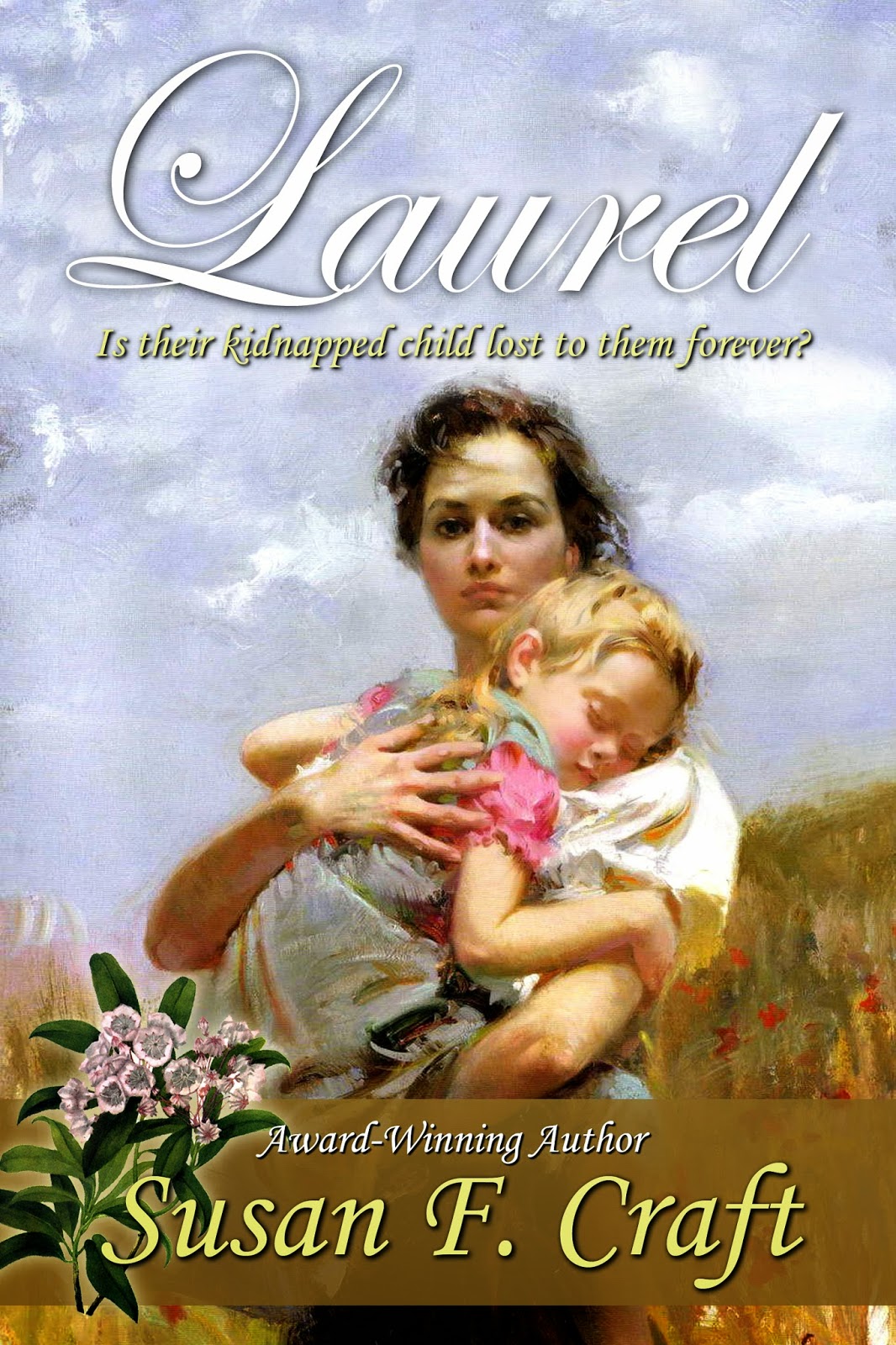
Susan F. Craft is the author of The Chamomile, a SIBA award winning Revolutionary War romantic suspense, and of it sequel Laurel, a post-Revolutionary War romantic suspense. The third novel in this trilogy, Cassia, will be released by Lighthouse Publishing of the Carolinas this September.

Susan can be reached at the follow social media outlets:
http://colonialquills.blogspot.com (post the fourth Monday of each month)
http://www.hhhistory.com (post on the 31st of months that have a 31st)

Twitter: @susanfcraft